Our lineup for today is: 1. Intro to Year 9 Drama - Frankenstein 2. Drama Process Journal 3. Class blog address: ois-drama9.blogspot.pt 4. Access Managebac 5. Warm-up - I'm Cool and So Are You: designed to help people get to know each other better (ice breaker) 6. Write Criterion B (Developing Skills) reflection on the warm-up (include date of warm-up) Name of warm-up Purpose of warm-up What did you learn? How can this help you with your acting? September 6, 9, 10, 13
Let's watch the film: Mary Shelley's Frankenstein (1994) Take some notes to help you complete the film worksheet;)
About a Boy
Comprehension Questions
1. Why is Will unemployed? How does he support himself? Where does his money come from?
2. What do Will's friends ask him to do for their daughter? Is he excited about doing it?
3. Why is Marcus worried about his mom? What does she do that makes him worry. Describe Fiona's unusual behaviour.
4. Why do the school bullies call Marcus and two other boys "Madonna" and "Spice Girls"?
5. Describe Will's "brilliant" plan to meet women.
6. Why does Will have to come up with a series of lies about his life?
1. Warm-up: Pass the Emotion Sit in a Drama circle. We're going to pass a smile around the circle. Start this off by passing a big smile to the person sat to your left, and then encourage it all the way around. Using the same principle, pass further emotions or feelings.
Sad
Excited
Angry
Hungry
Scared
etc
2) Warm-up: Machines The machine warm-up starts with one person building a machine and each person coming along to add to it cooperatively.
3)What are you doing? - The "What are you doing?" game is good for warming up the brain and body, and practicing using the brain and body differently at the same time.
4) Word association firing line - great for loosening people up, getting them used to being spontaneous, in the moment and focusing on listening and responding without censoring themselves.
June 4
1. Final Performanc
2. Discuss Reflective Commentary
3. Complete process journals
June 5
Criterion D - Reflective Commentary Due June 6
Brief
introduction - 1 or 2 sentences explaining the purpose of this work
(For example: The purpose of this commentary is to evaluate my work and
its impact on my audience. . .)
Paragraph1 Write
a paragraph detailing all your research (including the warm-ups)
influenced your final performance. Be specific, include details.
(Aiii) Paragraph 2 Write a paragraph that connects your product (your play and your performance) to the statement of inquiry ( Circumstances
sometimes affect the future.) and the global context (Identities and relationships). (For example: Throughout this process I have gained an understanding that . . .) (Di)
Paragraph 3 You can talk about how your message either reflects on the world or impacts the
world and your audience. For example: Throughout this process I have
learned that art can be created for a purpose and
theater/performances/films can send a message . . .) (Dii)
Paragraph 4 Critically analyse your own performance. Look at your acting, voice control, facial expressions, acting techniques used, etc. (Use
the self-evaluation of your video and teacher feedback sheet to
evaluate your strengths and weaknesses. How would you improve? What
would you do differently next time?) Suggest ways to improve. (Diii)
Purpose: physicalising the primary emotions: joy, grief, fear, anger, surprise,
love, laughter and how to use this in a performance rather than 'acting'
1. Bus Stop Activity
A classic improvisation game based around the characters you might meet at a bus stop.
Develop improvisation skills
Develop characterisation
When working on specific acting skills (e.g. making an
entrance, creating a fully developed character, knowing how to sit),
environments such a bus stop become convenient settings for the
chance meeting of characters.
You will choose one of the occupations for your character. Imagine that
you are waiting at a bus stop for a bus that will take you into New York
City when it starts to rain. In character (according to your
occupation) you will interact with other people who come into the scene
as they try to stay dry while waiting for the bus.
We will start the scene with one person, adding the others at suitable intervals.
Try to let the scene run a little, before jumping in with their own characters. May 23, 24
1. Set performance dates
2. The many voices of Meryl Streep
3. Continue with plot development task
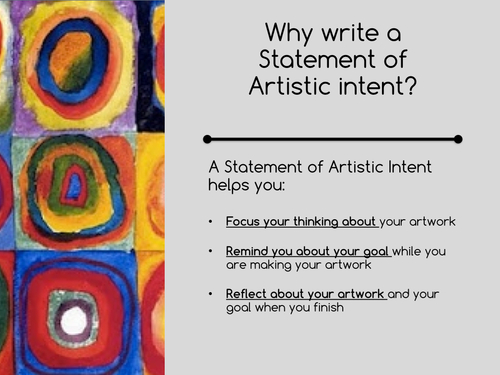
May 16 - Criterion C - Statement of Artistic Intention (In class writing)
Criterion C - Statement of Artistic Intention in class writing
(4 paragraphs) Use subject specific language
1. What are you doing? (purpose)This paragraph includes: - what topic you are studying this term in Drama - small background about Gothic novels and Gothic film - what your task is - name and plotline/storyline of your play
2.Why are you doing this (message) - what is the main message/theme you wish to communicate in your play - who is your audience and what lasting impact do you want this video to have on your audience? - why do you think it is important to communicate this message/theme to your "targeted" audience?
3.How are you going to achieve this (production and performance elements)
-how will your group bring this play to life? (include set, props, costumes, techniques)
-how will you bring your character to life? (include costume, props and acting techniques that you will use)
- what challenges/problems can you anticipate? How can you overcome these difficulties?
4. Justify your decisions(inspiration) - What inspired you? (Were you inspired by someone or something?) What made you choose this theme/topic? - Document the process that you took and talk about alternative options and justify your final decisions.
May 17
Dialogue Delivery - the words that the actor speaks
Some of the Most Common Themes in Literature (keywords for more research on this topic: Common Themes in Literature)
Crime Doesn't Pay.
Own Worst Enemy.
Coming of Age.
Overcoming the Odds.
Love conquers all.
Humanity vs. nature.
The individual vs. society.
Good vs. evil.
How many and what kinds of story plots are there?
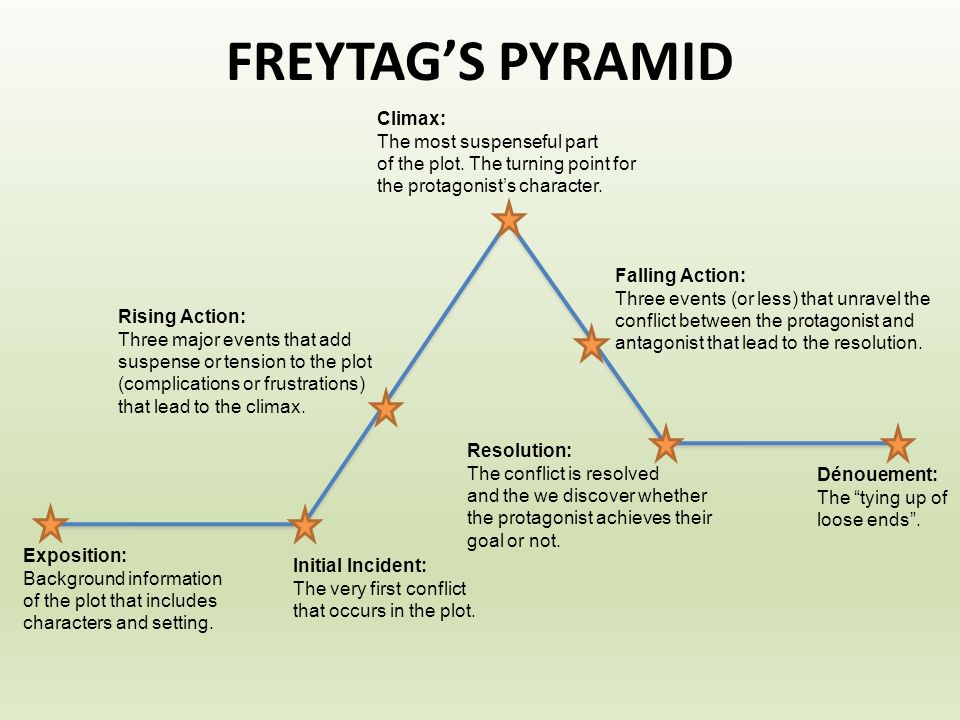
According to Mr. Booker, there are only seven basic plots in the whole world -- plots that are recycled again and again in novels, movies, plays and operas. Those seven plots are: 1.Overcoming the Monster, 2.Rags to Riches, 3.The Quest, 4.Voyage and Return, 5.Rebirth, 6.Comedy and 7.Tragedy.
1. Create groups Group 1 - Mark, Caio, Joana, Nerea Group 2 - Lili, Cosmé, Nikoloz, Rayaan Group 3 - Yasmin, Daniel, Arne, Caetano Group 4 - Tessa, Pedro, Neal, Camille
2. Work in your group to develop your plot Task:
Create a short 3 act play showing 2 emotions. The play should be
approx. 5-8 minutes. All the students in your group are actors in the
play. Each student should have the same amount of lines and acting time.
(Remember this is a drama class and I am grading you primarily on your
acting:)
Each group will choose a topic - no violence (no guns, no knives, no hitting) on the stage.
Work in your group to develop your ideas a. Title of your film b. Plot line (developed) c. Message you want to send d. Characters decided e. Costumes/Props d. Setting
You don't have to write the script out but you will storyboard the action.
i. demonstrate knowledge of the art form studied, including
concepts, processes, and the use of appropriate language
ii. demonstrate knowledge of the role of the art form in original or
displaced contexts
Task: Write an essay that answers the following question: Why is Mary
Shelley's Frankenstein still relevant today?Use subject specific terminology in your essay.
Paragraph 1 - Introduction; background on Mary Shelley
Paragraph 2 - Art Form; Role of Art Form (What genre is this film?What are the elements of this genre?) (When did this art form begin? What was going on in society when this art form began?)
Paragraph 3, 4, 5 - Discuss Themes (minimum of 3) (Say why they were important when the book was written. Say why they are still relevant today.) (Explain, include details, include examples).
Paragraph 6 - Explain how all of this research will help you produce and perform in a 3-act play.
April 30
Warm-up from 321 Acting Studio Breathing Relaxation Technique: actors can find your center, focus and relax for auditions
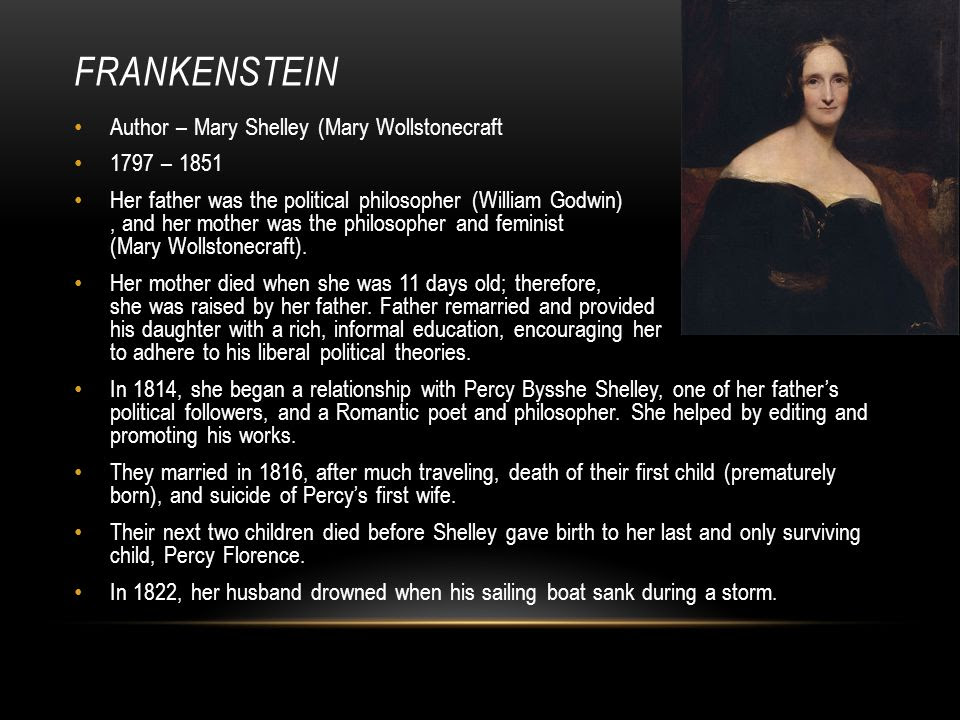
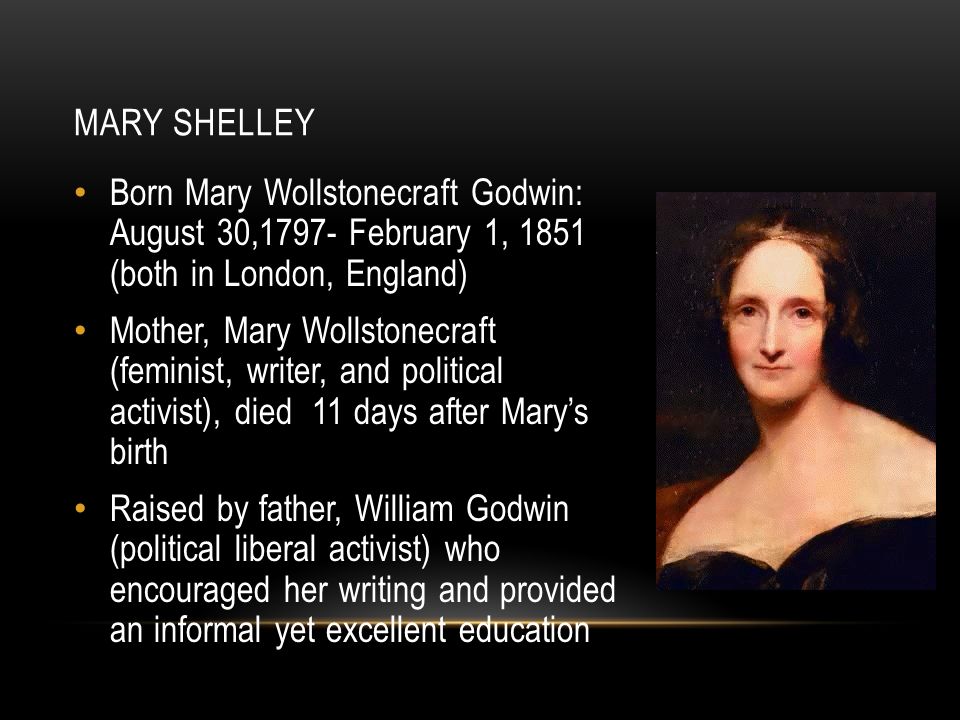
April 30, May 2 - Deadline May 2 End of Class Research - conduct research on Mary Shelley to find out who she was and why she wrote this book. a.Who was Mary Shelley? and In what year did she write Frankenstein? b.Under what circumstances did she write Frankenstein? c.What was going on politically and with technology in England and Europe during that time? Be specific, give examples. d. What "genre" is this book? Explain, include details. e. What are the "elements" of gothic film/literature? e.What are 4 themes in the movie/book Frankenstein? Be specific, give examples. Connect these themes to 2019. (Choose
4 themes. You can copy/paste this information. Write a paragraph for
each theme and say why this is still relevant today.) Need Works Cited Page Be sure to research: Frankenstein Themes, Motifs & Symbols (https://www.cliffsnotes.com/literature/f/frankenstein/frankenstein-at-a-glance)
April 9, 11, 12
1. Learn: 12 Camera Shots Every Actor Should Know https://www.nyfa.edu/student-resources/12-most-popular-camera-shots-actors-should-know/
2. Practice: It's your turn. In groups you may go around the campus using the camera to practice. Remember to be respectful and to take turns. Download the work to your computer. Return camera to Library.
3. Share: Share your work with others. Organize your images/video clips and share with your classmates.
Seven-sentence story structure Purpose: Creativity, Story structure
Most stories can be boiled down to seven basic sentences. These sentences begin like this:
Once upon a time....
And every day...
Until one day...
And because of that...
And because of that...
Until finally...
And from that day...
It's good to use examples when explaining this, I will use 'Hannah Montana: The Movie' here:
Once upon a time there was a girl who was secretly a pop-star. And every day she was careful not to let anyone know her secret. Until one day she met a boy, and he discovered her double life. And because of that he was angry and felt betrayed. And because of that Hannah felt awful. Until finally she owned up to her double life. And from that day the people from her home have known and accepted her secret, and she and the boy are very happy.
a.
Have the students sit in a circle and ask them to come up with one
sentence from the story structure each. If you have more than 7 students
you can just begin from the first sentence again once you reach the
eight student.
2. Film Worksheet - Criterion A Due May 5 - 9:00am
Welcome to Year 9 Drama! This term we will be focusing on Mary Shelley's Frankenstein. The 1994 film was based on a novel written by Mary Shelley and published in 1818.
https://i.ytimg.com/vi/BFtwnPNB0aE/hqdefault.jpg
March 19, 21, 22 Our lineup for today is: 1. Intro to Year 9 Drama - Frankenstein 2. Drama Process Journal 3. Access Managebac
4. Warm-up - I'm Cool and So Are You: designed to help people get to know each other better (ice breaker) 5. Write Criterion B (Developing Skills) reflection on the warm-up (include date of warm-up) Name of warm-up Purpose of warm-up What did you learn? How can this help you with your acting? 6. Let's watch the film: Mary Shelley's Frankenstein (1994)
March 12
Watch episodes of the following sit-coms: Modern Family, The Middle
What genre are these series?
What elements do they have in common?
How are they similar?
How are they different?
March 14, 15
Criterion D - Reflective Commentary Due March 15
Brief introduction - 1 or 2 sentences explaining the purpose of this work (For example: The purpose of this commentary is to evaluate my work and its impact on my audience. . .)
Paragraph1 Write a paragraph detailing all your research (including the warm-ups) influenced your final performance. Be specific, include details. (Aiii) Paragraph 2 Write a paragraph that connects your product (your play and your performance) to the statement of inquiry (When looking at plays and books one can see the impact of circumstances in the forming of a situation, character and person: Circumstances sometimes affect the future.) and the global context (Identities and relationships). (For example: Throughout this process I have gained an understanding that . . .) (Di)
Paragraph 3 You can talk about how your message either reflects on the world or impacts the world and your audience. For example: Throughout this process I have learned that art can be created for a purpose and theater/performances/films can send a message . . .) (Dii)
Paragraph 4 Critically analyse your own performance. Look at your acting, voice control, facial expressions, acting techniques used, etc. (Use the self-evaluation of your video and teacher feedback sheet to evaluate your strengths and weaknesses. How would you improve? What would you do differently next time?) Suggest ways to improve. (Diii)
Ty 1. What is a monologue? (find definition) 2. Watch this video
3. 1 minute video competition
Watch the 1st video:
4. Research and find a 1 minute monologue script that you would like to learn and perform.
Some links to start your research are:
http://www.bbbpress.com/2014/07/4-free-monologues-kids-teens/
https://www.dramanotebook.com/monologues-teenagers/
Criterion C - Statement of Artistic Intention in class writing(4 paragraphs) Use subject specific language
1. What are you doing? (purpose)This paragraph includes: - what topic you are studying this term in Drama - small background about Gothic novels and Gothic film - what your task is - name and plotline/storyline of your play
2.Why are you doing this (message) - what is the main message/theme you wish to communicate in your play - who is your audience and what lasting impact do you want this video to have on your audience? - why do you think it is important to communicate this message/theme to your "targeted" audience?
3.How are you going to achieve this (production and performance elements)
-how will your group bring this play to life? (include set, props, costumes, techniques)
-how will you bring your character to life? (include costume, props and acting techniques that you will use)
- what challenges/problems can you anticipate? How can you overcome these difficulties?
4. Justify your decisions(inspiration) - What inspired you? (Were you inspired by someone or something?) What made you choose this theme/topic? - Document the process that you took and talk about alternative options and justify your final decisions.